
When we incorporated TRI in 1982, the transportation industry was going through significant changes. The Motor Carrier Act of 1980 had opened the door to deregulation, creating new opportunities for motor carriers and for companies that could help them navigate the changing business environment.
That is where we began—as a tariff publishing service for motor carriers. Looking back more than 40 years later, it was the starting point for a business that would grow right alongside the computer industry.
The technology has changed considerably since those early days. So have the industries we serve. But the work still begins the same way: understanding how a business operates and finding practical ways to help it operate better.
The Early Years: Tariffs, Computers and Carrier Software
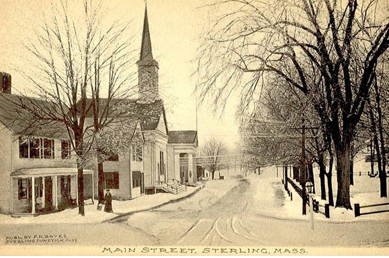
Publishing tariffs required an understanding of carrier rates, service territories and the details that went into pricing transportation. It also gave us a close look at the daily challenges motor carriers faced.
We saw opportunities to put computers to work on those challenges. Alongside our tariff publishing services, we began developing software for motor carriers using the database applications available at the time. We also provided network and computer support, built computers and offered hosting services.
In those days, getting a business computerized involved much more than installing a program. The equipment, software and network all had to work together, and people had to be able to use them in their daily work. Our involvement across those areas helped us understand the whole operation.
One development we are particularly proud of was introducing three-digit ZIP code rating systems to our carrier clients. We were the first company in New England to introduce this approach, replacing the cumbersome municipality-to-municipality rating systems used by the Motor Rate Bureaus.
Grouping locations by the first three digits of their ZIP codes made rating more manageable. It was a practical application of technology to a problem we knew well, and it reflected the direction our business was taking.
We continued producing tariffs into the early 1990s. As deregulation progressed and the industry’s needs changed, software development became an increasingly important part of our work.
The 1990s: A Different Way of Computing
Throughout the 1990s, we expanded our computer software and logistics software development. At the same time, the computing industry was changing drastically.
The Apple Macintosh had introduced many people to a graphical way of working with computers in the 1980s. The arrival of Windows 95 brought another major shift. Graphical interfaces, mouse-driven navigation and WYSIWYG—“what you see is what you get”—changed what people expected from their software.
We moved with it.
By the mid-1990s, we were programming graphical interfaces and incorporating those capabilities into our applications. Software could present information more clearly and put more of its functionality within reach of the people using it.
In 1997, we fully transitioned to Microsoft Access front ends supported by Microsoft SQL Server as the back-end database engine. Access provided the screens, forms and reports people worked with, while SQL Server supported the data behind them.
That became an important foundation for our development work and helped pave the way for Internet applications.
We also established www.trif.com in 1997. The name came from TRIF, the Standard Carrier Alpha Code, or SCAC, used in our tariff publishing work. It carried a piece of our transportation history into our Internet presence.
Growing Beyond Motor Carriers
Our experience with motor carriers led naturally to other parts of transportation and logistics.
We expanded our development work to public warehouses, air freight carriers, courier companies, heavy haulers, furniture carriers and moving companies. Each had its own requirements, terminology and ways of doing business.
For moving companies, we developed custom move management systems and integrated them with national household goods carriers such as Allied Van Lines. This meant understanding both the local company’s operation and how it worked with the larger carrier organization.
That kind of work reinforced something we had learned early: businesses in the same industry do not necessarily operate the same way. Custom software needs to account for those differences.
Knowing the technology matters. Knowing what the customer needs to accomplish matters just as much.
The 2000s: More Industries, More Possibilities
In the 2000s, our software development expanded into many other markets.
We built applications for manufacturers, insurance companies and agencies, investment companies, records management companies, aquatic service companies and landscapers. We worked with Internet stores that needed real-time inventory, networking organizations, builders, property brokers and freight forwarders.
Our work also extended to accounting companies, marketing resource enterprises, automobile haulers, tattoo parlors, attorneys, freight audit firms, auto service franchises, security service companies, museums and many nonprofit organizations.
It is quite a range when you put it all together.
Every industry brought something different to the table. A warehouse, an insurance agency, a museum and a landscaping company have different daily concerns. Working across those businesses gave us opportunities to learn, adapt and apply our experience in new ways.
It also broadened our perspective. A useful approach developed for one operation could sometimes help solve a problem in another, provided we understood the differences and adapted it properly.
Through all of that growth, we continued building software around the people who would use it and the work they needed to get done.
More Than 40 Years of Moving with Technology
We have worked through several generations of computing—from early database applications and custom-built computers to graphical interfaces, SQL Server, Internet applications and now artificial intelligence.
Each generation has brought new tools and new possibilities. It has also required us to keep learning.
Today, we are taking advantage of the power of AI. We see opportunities to use it in our development work and to help businesses make better use of their information. As with every technology we have adopted, its value comes from applying it to a useful purpose.
Our years of experience give us a strong foundation for that work. We have seen technologies arrive, mature and change. We have also spent decades learning how businesses operate, where the difficulties arise and what makes a solution useful in practice.
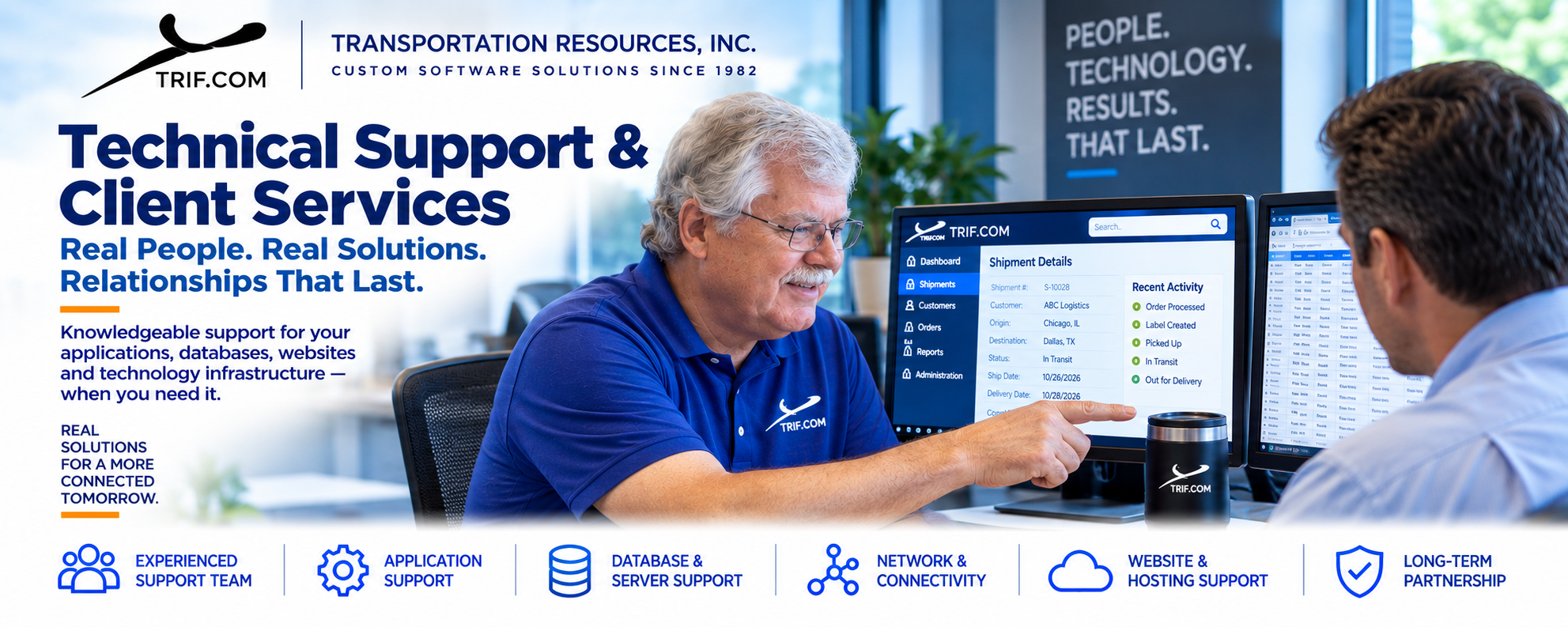
That experience continues to guide us as we explore what AI can do.
Looking Toward the 2030s
When TRI began in 1982, we could not have predicted every change that would follow. We knew there was an opportunity to help motor carriers, and we built from there.
Tariff publishing led to carrier software. Carrier software led to broader logistics systems. Those systems led to applications across many industries. Along the way, we grew with the technology and kept finding new ways to put it to work.
With generations of experience behind us, we are moving toward the 2030s with optimism and excitement about what comes next.
There will be new tools, new challenges and changes we have not yet imagined. We look forward to learning what they can do—and helping our customers put them to work.
We have been growing with technology for more than 40 years. We intend to keep going.